
Idrissa Soumaoro (Mali)
Updated: Jun 30
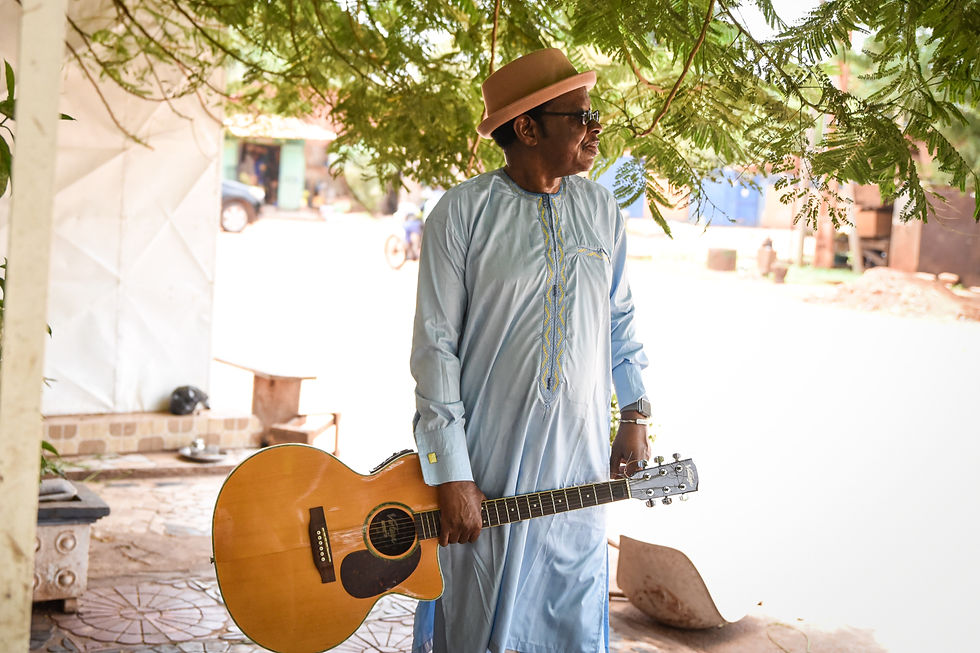
Idrissa Soumaoro, born in 1949 in Ouéléssébougou in southern Mali, is a singer, composer, guitarist and master of the kamale n’goni, an African harp. After studying at the National Institute of Arts in Bamako, he taught music in Diré before returning to the capital, where he performed widely and joined the influential Ambassadeurs du Motel alongside Salif Keïta and Kanté Manfila. While fully-sighted himself, he has devoted many years educating visually impaired musicians, even studying Braille musicography in the UK. His solo albums, including Koté (2003), Djitoumou (2010) and Diré (2023), draw on Bambara musical traditions while reflecting influences from rumba, blues, rock, soul and West African stringed music. Soumaoro’s long career, warm voice and thoughtful songwriting have long made him a respected figure in Malian music.
Featured Songs:
“Kalata” (The Ballot) is a direct appeal to both citizens and political leaders. Soumaoro encourages people to vote with hope and responsibility, calling for a president who will “make the people happy,” keep the environment clean and work for collective welfare. At the same time, the Desert Blues song speaks to politicians, reminding them that if they serve the public with honesty, “you will be elected and we will cheer for you.”
“I djidja” (Let Us Make an Effort) is a Bambara-language song from Diré (2023), an album rooted in Soumaoro’s deep affection for the northern Malian town where he taught in the 1970s. Cuban music had an enormous influence across Africa from the 1950s onward, inspiring the Congolese rumba and soukous styles that swept the continent and shaped generations of West African musicians. That rhythmic warmth runs through the Cuban Connections track “I djidja,” a call to fight for love and loyalty: “Let us make an effort to keep our feelings unchanged, not to betray and to love each other until the end.”
Featured on:
Click image to learn more
